Site Checker- How to Use a Website Checker to Boost Your Site’s SEO and Performance
In today’s Competitive digital landscapes, having a website is just the first step. To truly succeed, your site needs to be discoverable, fast, and user-friendly. This is where a powerful tool known as a “site checker” comes into play. If you’re wondering how to leverage this invaluable resource to enhance your SEO and overall website health, you’ve come to the right place.
What Exactly is a Site Checker?
A site checker, often referred to as a website audit tool or SEO analyzer, is a software application designed to scan your website for a wide array of potential issues that could be hindering its performance, user experience, and search engine ranking. From technical errors to on-page optimization opportunities, these tools provide a comprehensive overview of your site’s strengths and weaknesses. It’s the ultimate checker website tool.
Why is Using a Site Checker Essential for SEO?
For anyone serious about improving their website’s visibility on search engines like Google, a site checker is non-negotiable. It’s the best way to check your site and perform SEO optimization:
- Identifies Technical SEO Issues: It uncovers problems like dead link or broken links, crawl errors, duplicate content, and issues with sitemaps or robots.txt.
- Enhances Page Speed and Performance: Slow loading times lead to higher bounce rates. A checker helps pinpoint large images, unoptimized code, or server response issues affecting speed.
- Optimizes On-Page Elements: It checks for missing or poorly optimized meta descriptions, title tags, heading structures, and image alt attributes, all vital for on-page SEO.
- Improves User Experience UX: A healthy, fast, and error-free website naturally offers a better user experience.
- Monitors Mobile Responsiveness: Essential for mobile-first indexing.
- Boosts Site Security: It can detect security vulnerabilities or ensure your site is using HTTPS, acting as a primary safety checker. This helps against malicious websites or scam attempts on your domain.
How to Use a Site Checker: A Step-by-Step Guide for Better SEO
Getting started with a site checker is straightforward. Follow these steps to conduct an effective site audit:
- Choose a Reputable Tool: There are many site checker tools available, both free and paid (e.g., Google Search Console, SEMrush Site Audit, Ahrefs Site Audit). Select one that fits your needs and budget. This is the first step in SEO optimization checker usage.
- Enter Your Website URL (URL Checker): Simply paste your website’s main URL (site’s url) into the tool’s designated field and initiate the scan. This is what makes it a practical URL checker.
- Analyze the Audit Report: The tool will generate a detailed report, often categorizing issues by severity and type.
- Prioritize Issues: Focus on critical errors first (e.g., crawl errors, dead link pages, severe page speed issues).
- Understand the Recommendations: Take the time to understand the recommendations.
- Implement Fixes: Work through the prioritized list, addressing each issue (e.g., fixing broken links, improving performance).
- Monitor and Re-audit: SEO is an ongoing process. Re-run the site checker monthly to monitor progress and detect new issues.
Key Metrics and Issues to Look For in Your Site Checker Report
When reviewing your SEO tools report, pay close attention to these common areas:
- Crawlability and Indexability: Check for issues with your robots.txt file or sitemap.
- Page Speed & Core Web Vitals: Look for low scores in areas like LCP, FID, and CLS.
- Broken Links (404 Errors): Internal and external dead link pages hurt user experience and SEO. Use the link checker feature for effective link checking and advanced broken link detection.
- Missing or Duplicate Meta Titles/Descriptions: Each page should have a unique, compelling meta title and description.
- Image Optimization: Uncompressed images, missing alt tags, or oversized images can slow down your site.
- Mobile Usability: Ensure all elements are clickable and readable on mobile devices.
- HTTPS Status and Security: Confirm your website is secure and running on HTTPS.
Conclusion: Make Site Checking a Regular Habit
Utilizing a site checker is not a one-time task but a continuous effort that is fundamental to maintaining a high-performing, SEO-friendly website. By regularly auditing your sites, addressing identified issues promptly, and striving for continuous improvement, you’ll ensure your website not only ranks well but also provides an excellent experience for all your visitors. Start checking your site today and unlock its full potential!
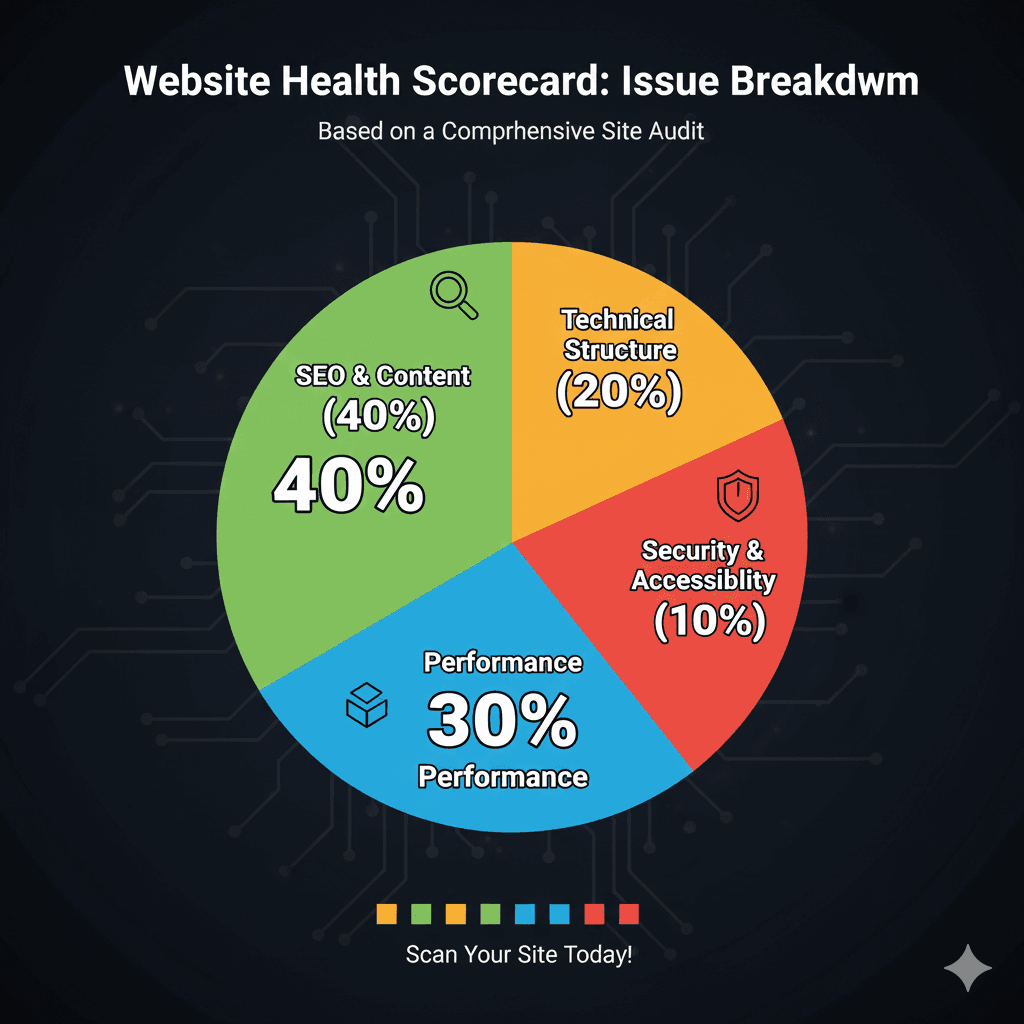
Website Health Scorecard
This pie chart visualizes the contribution of different categories to the total volume of issues found during a typical website audit.
| Category | Issue Distribution | Description | Status Color |
|---|---|---|---|
| SEO & Content | 40% | The largest segment, indicating that the majority of issues found relate to on-page optimization, content quality, or keyword implementation. | Green |
| Performance | 30% | A significant portion of issues is related to site speed, page load times, and Core Web Vitals. | Blue |
| Technical Structure | 20% | Issues related to foundational technical health, such as broken links (404s), HTML/CSS validity, or server configuration. | Orange |
| Security & Accessibility | 10% | The smallest segment, covering critical items like HTTPS status, security headers, or basic accessibility compliance. | Red |
Key Insight: Focus on SEO
The chart indicates that SEO & Content and Performance combined account for 70% (40% + 30%) of all detected issues, suggesting that optimization efforts should be heavily weighted towards content quality and site speed
Related Articles from Our Network
- JSON Parse, JSON, Parse, Parse JSON, JSON.parse, Parser – A Complete Guide for Beginners(json parser)
- What Is JWT? (JSON Web Token Explained)(json web token)
- Why Dummy JSON API Is Used? Complete Guide to Dummy API, JSON API, DummyJSON,JSONPlaceholder & Fake Data Tools(fake json)
- JSON Diff, JSON Compare, Diff, JSON-Diff-TS(compare json)