Search Page Optimization: Maximizing Visibility and Clicks on the SERP (A Key to Your Site’s Success)
Introduction: What is Search Page Optimization (SPO) and Why It Matters for Your Search Engine Success?
Search Page Optimization (SPO) goes beyond traditional SEO by focusing specifically on how your site’s pages appear directly on the Search Engine Results Pages (SERPs). It’s about making your listings as appealing and informative as possible to encourage users to click on your result rather than a competitor’s. In essence, SPO is your first impression to a potential visitor, crucial for driving organic search traffic and improving your overall digital marketing visibility.
Why is Search Page Optimization Crucial for Your SEO Optimization?
Mastering SPO isn’t just about looking good; it’s a fundamental aspect of driving organic search traffic and improving your overall search engine optimization (SEO) performance and SEO rankings.
- Enhanced Visibility: By optimizing elements like page titles and meta descriptions, you can make your listings stand out, even if you’re not in the absolute top spot. Enhanced features like rich snippets draw the eye, increasing your chances of being seen.
- Higher Click-Through Rates (CTR): A well-optimized search snippet directly impacts your CTR. More clicks mean more traffic, which search engines interpret as a sign of relevance and quality, potentially boosting your SEO rankings over time.
- Improved User Experience: Clear, concise, and informative search results help users quickly determine if your page has the answer they’re looking for, leading to a better experience even before they visit your site.
Key Elements of Search Optimization and How to Master Them
1. Optimizing Your Title Tags (The Page Title)
- Include your primary keyword naturally, preferably near the beginning.
- Make it descriptive and compelling, accurately reflecting the page’s content.
- Keep it concise (ideally under 60 characters) to avoid truncation.
2. Crafting Compelling Meta Descriptions
- Summarize the page’s content accurately and enticingly.
- Include your target keyword phrase to increase perceived relevance.
- Add a clear call to action (e.g., “Learn More,” “Discover Now”).
3. Structuring SEO-Friendly URLs
Clean, descriptive URLs help both users and search engines understand what your page is about before they even click.
4. Implementing Structured Data (Schema Markup)
Schema markup helps search engines understand the context of your content, allowing them to display rich snippets and other enhanced features on the SERP.
- Use relevant keywords and schema types (e.g., Article, FAQPage, Product, Review).
- Leads to rich results like star ratings, images, and other visual enhancements, significantly boosting visibility and CTR.
5. Optimizing for Featured Snippets
Featured snippets appear at the very top of the SERP (Position 0) and can dramatically increase visibility and CTR. This is an advanced form of content optimization.
6. Improving Page Speed
While not a direct SERP visual element, page speed is a core ranking factor and profoundly influences user experience. Ensuring your site is fast is a critical part of engine optimization.
Best Practices for Ongoing Search Page Optimization
- Regular Audits: Review SERP snippets for accuracy, truncation issues, and opportunities for improvement.
- Monitor Analytics: Track CTR for your pages in Google Search Console to identify underperforming snippets.
- Stay Updated: Search engine algorithms and SERP features evolve constantly. Stay informed to maintain your competitive edge and high SEO rankings.
Conclusion
Search Page Optimization is an indispensable strategy for any site looking to maximize its organic search reach and attract qualified visitors. By meticulously optimizing your page titles, meta descriptions, URLs, leveraging structured data, and focusing on user experience, you can transform how your pages appear on search engines. Implement these SEO optimization strategies today and watch your search performance soar, leading to higher click-through rates and more valuable traffic to your site.
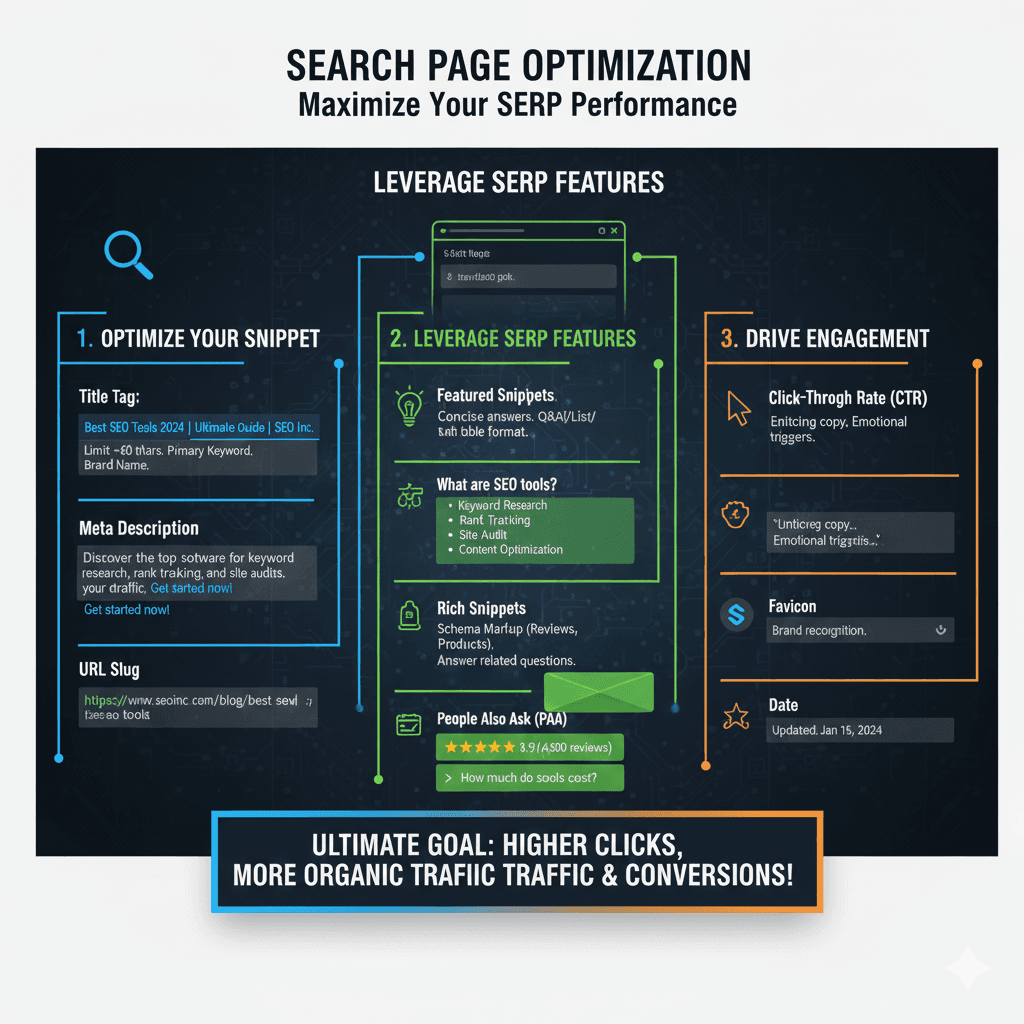
Infographic: SEARCH PAGE OPTIMIZATION: Maximize Your SERP Performance
The infographic focuses on optimizing content that appears directly on the SERP to drive more clicks and traffic. It’s broken down into three main strategies:
1. 🔍 Optimize Your Snippet
- Title Tag: Limited to ~60 characters; include Primary Keyword & Brand Name.
- Meta Description: Used to hook the user.
- URL Slug: Clean, readable URL structure.
2. ✨ Leverage SERP Features
- Featured Snippets: Concise answers in Q&A or List/Table format.
- Rich Snippets: Use Schema Markup to show reviews or product details.
- People Also Ask (PAA): Questions and answers related to the main query.
3. 🖱️ Drive Engagement
- Click-Through Rate (CTR): Increased using enticing copy and emotional triggers.
- Favicon: Enhances brand recognition.
- Date: Shows content recency for users.
Related Articles from Our Network
- java json parser example- A Comprehensive Guide for Developers(json parser)
- How to Implement jwt node js Authentication – A Step-by-Step Guide(json web token)
- How to Generate and Use Dummy JSON Data for Development and Testing(fake json)
- JSON Compare Online Tool: Quickly Find Differences & Boost Your Workflow(compare json)