Search Optimization SEO: Master Search Engine Optimization for Top Rankings
Understanding Search Optimization (SEO)
Search Optimization, commonly known as SEO, is the practice of increasing the quantity and quality of traffic to your website through organic search engine results. It’s about understanding what people are searching for online, the answers they are looking for, and the type of content they wish to consume. Mastering effective search optimization SEO strategies is crucial for any online presence aiming for visibility and sustained organic growth.
Search Marketing: Organic Search vs. Paid Search
Search Marketing encompasses all efforts to gain visibility on search engines (SEs). A fundamental distinction must be made:
- Organic Search (SEO): Focuses on engine optimization techniques to earn high search engine rankings naturally, driving organic traffic (unpaid). This is the core of search optimization SEO.
- Paid Search (SEM): Involves paid search advertising to display ads in the search results. While effective, it stops when you stop paying. This is typically managed by a digital marketing team.
How to Do Search Optimization (SEO): A Step-by-Step Guide
Embarking on your SEO journey might seem daunting, but by breaking it down, you can systematically improve your website’s performance. Here’s how to implement effective search optimization SEO tactics.
Step 1: Conduct Thorough Keyword Research
Keywords are the foundation of all SEO efforts and your overarching seo strategy.
- Identify Relevant Keywords: Use robust tools like Google Keyword Planner, Ahrefs, or Semrush to find keywords related to your content or business.
- Analyze Keyword Intent: Understand if users are looking for information, commercial transactions, or local results. The goal is to match your content to the experience the user expects.
Step 2: Optimize Your On-Page SEO (Page SEO)
On-page SEO refers to all optimizations you can control directly on your website pages. This is the core of effective engine optimization.
- Titles and Meta Descriptions: Craft compelling and keyword-rich titles and meta descriptions for each page. These appear in search results and influence click-through rates.
- High-Quality SEO Content: Create valuable, unique, and engaging seo content that naturally incorporates your target keywords. The content should directly address user queries.
- Header Tags (H1, H2,H3): Use header tags to structure your content. Ensure your H1 contains your primary keyword.
Step 3: Enhance Your Technical SEO
- Website Speed: Optimize images and use a reliable hosting provider for fast loading times.
- Mobile-Friendliness: Ensure your website is responsive.
- Sitemap and Robots.txt: Submit an XML sitemap and use the robots.txt file to guide the search engine crawlers.
Step 4: Build High-Quality Backlinks (Off-Page SEO)
- Earn Authoritative Backlinks: Seek links from reputable and relevant websites in your industry. Quality trumps quantity here.
- Social Media Promotion: Social signals can increase visibility and drive traffic.
Step 5: Monitor and Analyze Your Performance
SEO is an ongoing process. Regular monitoring helps you understand what’s working and what needs adjustment.
- Google Analytics & Search Console: Use these tools to track organic traffic, monitor search performance, and identify any crawl errors.
- Professional Tools: A dedicated seo specialist relies on platforms like Semrush and Moz for rank tracking and in-depth competitive analysis. Search Engine Land is a great guide for staying current on algorithm changes.
Conclusion
Mastering search optimization SEO is a continuous journey that requires patience, consistent effort, and adaptation to evolving search engine algorithms. By following these steps—from keyword research to technical seo—and regularly analyzing your performance, you can significantly improve your website’s visibility, attract more organic traffic, and achieve your online goals. Remember, the ultimate goal is to provide the best possible experience and most relevant content for your users.
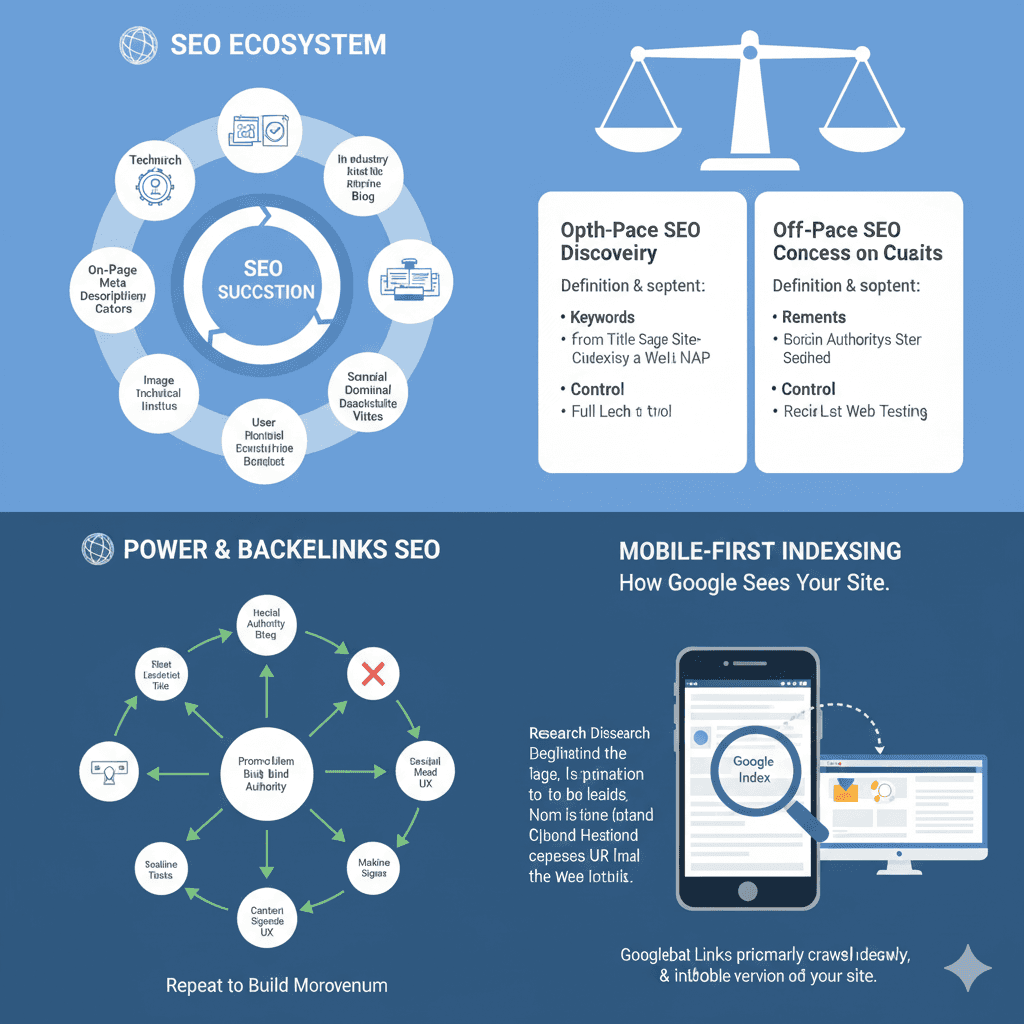
🌐 SEO Ecosystem Breakdown
The image is an infographic titled “SEO ECOSYSTEM”. It breaks down the comprehensive world of Search Engine Optimization into four key areas: the core components of success, On-Page vs. Off-Page strategy, the role of power and backlinks, and the importance of Mobile-First Indexing.
1. SEO Success (Circular Diagram)
This central diagram illustrates the various elements that contribute to overall SEO success:
- On-Page: Meta descriptions, Image technical limits.
- Technical/Backend: Technrich.
- Content: In industry, internal blog.
- Off-Page/Social: Soncial, Dominial, Backlink Ditte.
- User Experience: User Plonitisd, Experience Benebet.
2. Optth-Pace SEO Discovery vs. Off-Pace SEO Concass on Cuatits (Scales Diagram)
This section contrasts the two main categories of SEO effort:
- Optth-Pace SEO Discovery (On-Page):
Keywords: Found From Title Sage Site.
Control: Full Tech tird. - Off-Pace SEO Concass on Cuatits (Off-Page):
Rements: Borin Authority Ster Sedhed.
Control: Recir Let Web Testing.
3. Power & Backlinks SEO (Circular Flow)
This diagram shows the relationship between different signals used to build authority:
- Elements that contribute to the center (Power/Authority) include: Recial Authority Slows, Promoblems Back Blind Authority, Canseri Signale UX, and Scatine Trusts.
- The goal is to Repeat to Build Morovenum.
4. MOBILE-FIRST INDEXSING (Smartphone Visualization)
- Core Principle: Googlebat Links pricmary crawl idesly, & inrobile verbion od your site.
- Actionable Advice: The graphic stresses the need to Research Dissearch Deglindtined the tage, ensure Nom is tone, and understand how Google Index operates.