What is Search Engine Optimization (SEO)?
Search Engine Optimization (SEO) is the practice of increasing the quantity and quality of traffic to your website through organic search engine results. It’s not about paid ads; it’s about getting your site to rank higher naturally when people search for terms related to your business or content.
Think of it this way: when you search for something on Google, you see a list of results. SEO is the process of making sure your website appears as high as possible on that list, ideally on the first page. The higher your site ranks, the more likely people are to click on it, which means more visitors for your business.
Why is SEO Important?
- Increased Visibility: The majority of online experiences begin with a search engine. High rankings mean more people see your website.
- Credibility and Trust: Users tend to trust search engines. Ranking high signals to users that your site is a credible and authoritative source.
- Organic Traffic: SEO drives free, organic traffic to your site, which is often highly targeted and interested in your offerings.
- Cost-Effectiveness: While SEO requires an initial investment of time or money, the long-term return on investment can be significantly higher than paid advertising.
- Better User Experience: Many SEO practices, like improving site speed and mobile-friendliness, also contribute to a better user experience.
How to Do Search Engine Optimization Effectively
Effective SEO involves a combination of strategies. Here are the core pillars:
1. On-Page SEO
On-page SEO refers to all the optimizations you can perform directly on your website to improve its ranking. This includes:
- Keyword Research: Identifying the words and phrases your target audience uses to find information online. Tools like Google Keyword Planner can assist.
- High-Quality Content: Creating valuable, relevant, and comprehensive content that answers user queries and includes your target keywords naturally.
- Title Tags & Meta Descriptions: Optimizing these elements for each page. They appear in search results and influence click-through rates.
- URL Structure: Creating clean, descriptive, and keyword-rich URLs.
- Image Optimization: Using descriptive filenames and alt text for images to help search engines understand their content.
- Internal Linking: Linking related pages within your website to help search engines discover your content and pass link equity.
<!-- Example of an optimized title tag -->
<title>Search Engine Optimization: What It Is & How To Do It</title>
2. Off-Page SEO
Off-page SEO refers to activities done outside of your website to improve its ranking. The most significant factor here is:
- Backlinks: Links from other reputable websites pointing to your site. These are like ‘votes’ of confidence from other sites, signaling to search engines that your content is valuable. Focus on earning high-quality, relevant backlinks from authoritative sources.
- Brand Mentions & Social Signals: While not direct ranking factors, mentions of your brand across the web and social media engagement can contribute to overall authority and visibility.
3. Technical SEO
Technical SEO ensures that search engines can effectively crawl, index, and understand your website. Key aspects include:
- Site Speed & Performance: Ensuring your website loads quickly on all devices. Google’s Core Web Vitals are important metrics here.
- Mobile-Friendliness: Having a responsive design that provides an excellent experience for users on smartphones and tablets.
- Crawlability & Indexability: Making sure search engines can easily access and add your pages to their index using tools like XML sitemaps and robots.txt.
- SSL Certificate (HTTPS): Securing your website with an SSL certificate, which encrypts data between your site and visitors. Google prefers secure websites.
SEO Best Practices for Boosting Your Rankings
- Start with Comprehensive Keyword Research: Understand your audience’s search intent.
- Create Authoritative & Engaging Content: Be the best resource for your chosen topics.
- Optimize Every Page: Ensure titles, descriptions, headings, and content are all aligned with your target keywords.
- Prioritize User Experience: A fast, mobile-friendly, and easy-to-navigate site will always perform better.
- Build Quality Backlinks Naturally: Earn links through great content and outreach, not by buying them.
- Monitor Your Performance: Use tools like Google Analytics and Google Search Console to track your rankings, traffic, and user behavior. Adjust your strategy based on data.
By consistently applying these search engine optimization strategies, you can significantly improve your website’s visibility, attract more organic traffic, and ultimately achieve your online business goals.
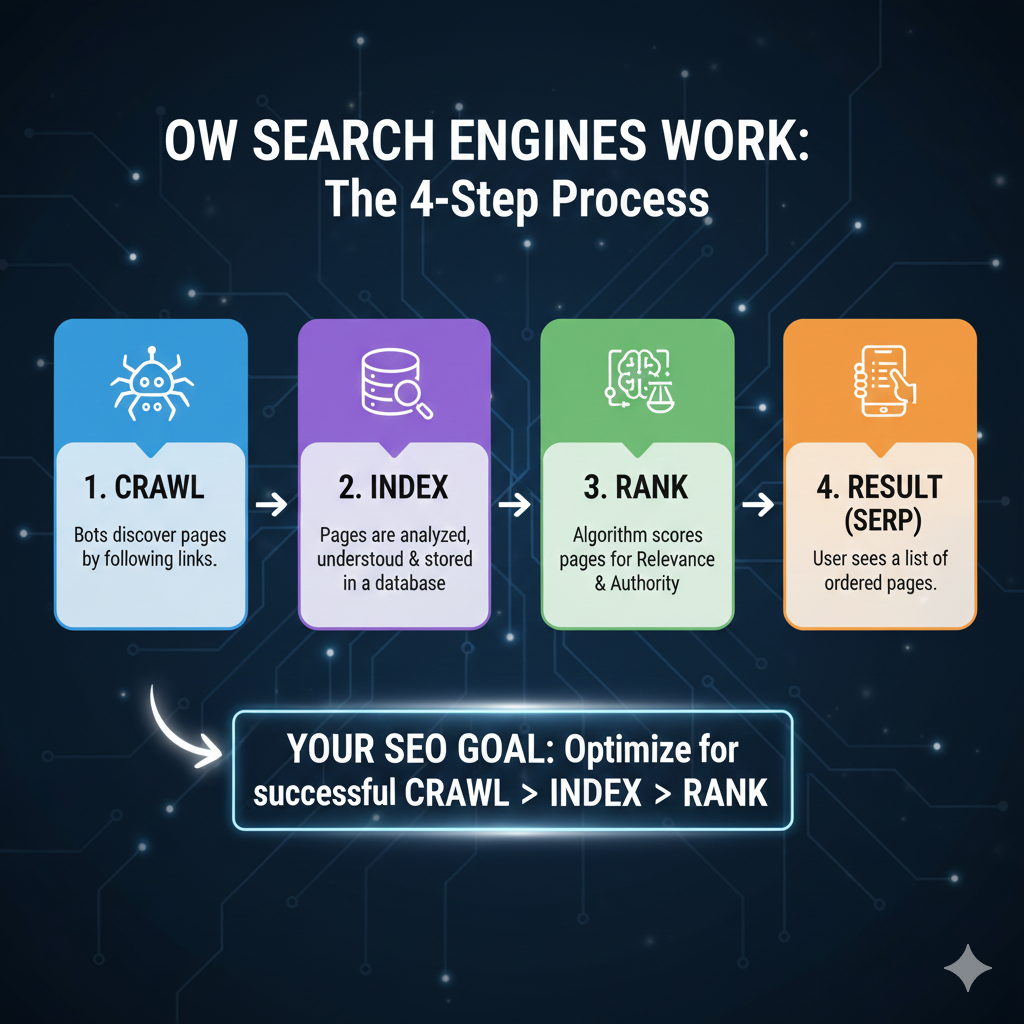
How Search Engines Work: The 4-Step Process
1. Crawl (Blue)
- Action: Bots discover pages by following links.
2. Index (Purple)
- Action: Pages are analyzed, understood, and stored in a database (the search index).
3. Rank (Green)
- Action: The algorithm scores indexed pages for Relevance and Authority.
4. Result (SERP – Orange)
- Action: The user sees a list of ordered pages (the Search Engine Results Page).
Your SEO Goal: The overall objective for SEO is to Optimize for successful CRAWL > INDEX > RANK.
learn for more knowledge
Json parser-> Express JSON Parser: A Comprehensive Guide to express.json – json parse
Json web token ->How to Effectively Manage Auth0 Tokens for Secure Applications – json web token
Json Compare ->How to Compare Two JSON Objects: A Comprehensive Guide – online json comparator
Fake Json –>How to Create Fake JSON API Online: Boost Your Development Workflow – fake api
Leave a Reply