Search Optimization is the process of improving how easily your content, website (site), or product can be found through search engines like Google, YouTube, Bing, or even internal site searches. The main goal of optimization is to make your content appear at the top of search results so more people can find it.
When most people say “search optimization,” they are usually referring to SEO (Search Engine Optimization) — specifically improving a website to rank higher in Google Search.
Why Search Optimization is Important for Organic Search
Search optimization is a critical component of any digital marketing strategy. It helps you improve SEO performance and drive long-term growth by ensuring a superior search experience for the user:
- Get more organic search (free) traffic.
- Increase visibility and brand awareness.
- Reach the right audience based on their search queries.
- Improve website performance and user experience.
- Increase sales, leads, or conversions.
Key Types of Search Optimization and Engine Optimization
Search Optimization is a broad field, with specialized forms of engine optimization tailored to different platforms:
1. SEO (Search Engine Optimization)
This is the most common form of search optimization. It involves a set of practices aimed at improving a website’s visibility for relevant search queries in general search engines.
- SEO Google: Specifically targeting Google’s algorithm, often involving technical SEO, content optimization, and link building (backlinks).
- Optimization Search Service: Hiring or using tools that provide a dedicated optimization service to manage your site’s technical and content health.
2. App Store Optimization (ASO)
Improving an app’s visibility in App Store or Play Store search.
3. YouTube Optimization
Helping videos rank higher on YouTube search.
4. E-commerce Search Optimization
Making products easier to find inside platforms like Amazon, Shopify, or your own store, using specific product keywords.
Key Elements of Search Optimization (Improving SEO)
To successfully improve SEO and achieve high keyword rank, search optimization relies on several interconnected elements:
- Keyword research: Understanding the keywords and search queries users enter.
- High-quality content: Providing valuable, authoritative content that matches search intent.
- Optimized page titles and descriptions.
- Fast page speed and technical $\text{SEO}$.
- Mobile-friendly design.
- Backlinks: Quality links from other authoritative sites.
- Using tools like a keyword rank checker to monitor the performance of your keywords.
- Search Marketing: The overall strategy that encompasses both SEO and paid search.
Conclusion
Search Optimization is a vital strategy for improving the visibility of your content or website so it appears higher in search results. SEO Google practices are key to this success. Better optimization leads to more organic search traffic, more customers, and a stronger online presence. Using a keyword rank checker helps you measure the success of your engine optimization efforts.
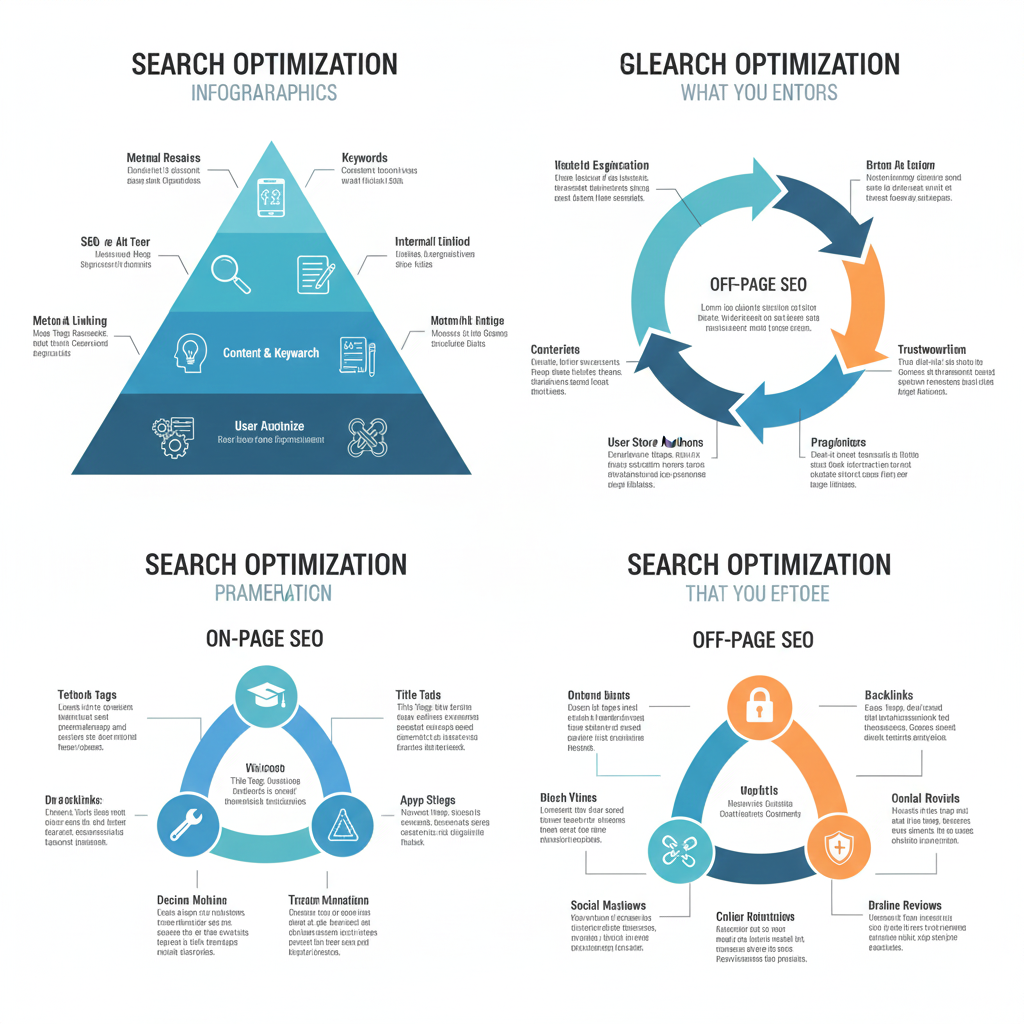
“Search Optimization” Infographic
This infographic provides a detailed view of the factors and practices involved in optimizing for search engines, categorized into On-Page and Off-Page strategies.
1. Search Optimization Infographics (The Hierarchy Pyramid)
This diagram shows the ranking factors organized by influence, from the foundational base up to the apex.
| Layer | Factor | Details |
| Apex | Metnal Resales | Considers the overall mental response to the page. |
| Upper Middle | Keywords | Focuses on using relevant keywords. |
| Middle | Content & Keyword | Combines the quality of content with effective keyword targeting. |
| Lower Middle | User Exptoortty | Relates to user experience and overall site structure. |
| Base | SEO & Alt Teer | Includes basic SEO elements like alt text. |
| External | Metoa & Linking | Covers internal and external linking strategies. |
2. GLEARCH OPTIMIZATION (Circular Flow – What You Entors)
This circular flow diagram illustrates the iterative process of Off-Page SEO based on external signals.
- Trustwoorttion: Focuses on the site’s overall trustworthiness and authority.
- Off-Page SEO: The central element, driven by external factors.
- Hedsde Exgatication: How search engines view the site’s structure.
- User Sttton Authons: User-generated content and author authority.
- Briton da Intons: User intent, ensuring content meets the user’s needs.
3. Search Optimization PRAMERATION (Circular Flow – On-Page SEO)
This diagram focuses on internal, on-site optimization factors.
- Tefooe Tags & Titles Dids: Optimizing the HTML title tag and other descriptive tags.
- Dicinan Moihins: Focuses on optimizing the technical aspects of the page.
- Traoam Mienaiion: Relates to structured data and rich snippets.
- Wicsoo: Addresses issues like crawl errors and technical health.
4. Search Optimization (Checklist – Off-Page SEO)
This checklist provides actionable items for improving a site’s authority off-site.
- Backlinks: Focuses on acquiring high-quality, authoritative backlinks.
- Contend Boints: Generating content that naturally attracts links.
- Social Maxliews: Utilizing social media signals.
- Drallne Reviows: Managing and leveraging online reviews.
- Oonial Rtevints: Ensuring citations and listings are accurate.
learn for more knowledge
Json Parser ->What is JSON Parser Online? Complete Guide for Beginners – json parse
Json web token ->What Is JWT Token? (JSON Web Token Explained for Beginners) – json web token
Json Compare ->JSON Comparator, Online JSON Diff, JSON Compare Tool – online json comparator
Fake Json ->Testing Software Tools: Best Tools & Software to Create Fake JSON Data for Testing – fake api
Leave a Reply